.png)
It’s Okay to Suck at Yoga: What Being the New Kid Taught Me About Belonging

I have spent a lot of my life being the new person. I was an Air Force brat before I ever had the chance to decide whether I wanted to be one. My family moved often, and then, as an adult, I joined the military myself and continued the tradition. The longest I have ever lived in one place consecutively is six years.
My first PCS, or Permanent Change of Station, happened when I was four months old. My family moved to Germany, where we stayed for six years before returning to the United States. I don't remember being four months old, obviously, but Germany was my first home outside of the United States, and moving became part of the rhythm of my life long before I understood what moving meant.
By the time I graduated from high school, I had attended three different high schools in three very different states, each with its own culture, customs, personalities, and ways of doing things. That meant learning how to walk into an established community over and over again and figure out how to find my place within it.
And yet, I love moving. I really do. There is something exciting about it. A new place means new streets to explore, new restaurants, new people, new things to learn, and the strange little thrill of not knowing where anything is yet. I enjoy the adventure of it, and there is something about starting over that has always felt natural to me.
But there is another side to always being new. When you arrive somewhere after everyone else has already established their routines, friendships, inside jokes, and ways of doing things, you are the person who doesn't know. You are the person who has to ask questions. You are the person who has to figure out where things are and who to ask for help. You are the person who hasn't yet figured out where you fit.
Being new can be exciting, but it can also be scary, overwhelming, lonely, and uncomfortable. It can bring up feelings of inadequacy and make you feel ignorant when everyone else seems to understand something that you don't. Sometimes you know, before you even begin, that you are probably going to be bad at something for a while. You won't know what you're doing, you will make mistakes, and you may ask questions that seem obvious to everyone else.
After enough moves, I became accustomed to that feeling. I wasn't necessarily comfortable with it, but I became familiar with it, and there is a subtle difference between those two things.
Learning How to Be New

When you move often, you become very good at entering established worlds. Everyone else already knows each other. You are arriving in the middle of something that was already happening before you got there.
At first, you are an outsider. Then, little by little, things begin to change. You learn the roads. You learn people's names. You find your grocery store. Someone invites you to lunch. You figure out where to park. You have a conversation with someone that isn't about being new. You begin to recognize faces, and eventually you realize that you aren't quite as new anymore. You have started to belong.
That experience has taught me something I didn't understand when I was younger: belonging is often something we grow into. We can walk into a place where we don't yet feel like we belong and assume that the feeling itself is evidence that we don't. It isn't. Sometimes it simply means we're new.
The Unknown Is Uncomfortable

I think one of the hardest parts of being new is the unknown. We don't know what is going to happen. We don't know whether people will like us, whether we will be good at something, whether we will make friends, or whether we will understand what everyone else seems to understand so easily.
Our minds are very good at filling in those blanks, and we don't always fill them with the most generous possibilities. We imagine ourselves failing. We imagine everyone noticing. We imagine that we're the only person who doesn't know what they're doing. We imagine that everyone else belongs and we're somehow the exception.
Sometimes the fear isn't really about whether we belong. It is about what might happen if we try and discover that we aren't good enough. That fear can keep us from trying altogether. We don't go to the new class. We don't introduce ourselves. We don't ask the question. We don't speak up. We don't walk into the studio. We stay where we are because the discomfort of the familiar can feel safer than the possibility of being uncomfortable somewhere new.
There may be another possibility. Maybe being uncomfortable doesn't mean we're doing something wrong. Maybe sometimes it means we're learning.
It's Okay to Be Bad at Something

I think we need to give ourselves permission to be bad at things. Not permanently bad, not careless, and not unwilling to learn. I mean simply being new enough that we haven't figured it out yet.
When we begin something, there is almost always a period when we aren't very good at it. We don't know the terminology. We don't understand the rules. We don't know how our body is supposed to move. We don't know how other people will respond to us. We don't know what we don't know. And that's okay.
IT'S OK TO SUCK, TO BE UNCOMFORTABLE, AND TO NOT KNOW!
The important part is what we do with those feelings. Can we stay curious instead of turning discomfort into a verdict about ourselves? Can we learn instead of deciding we're incapable? Can we allow ourselves to be beginners? Can we remain present long enough to discover that something that once felt completely foreign can eventually become familiar?
Discomfort doesn't automatically make us stronger, wiser, or more compassionate.
Sometimes discomfort simply hurts. But when we have the support, willingness, and safety to move through unfamiliar experiences, they can teach us things we could not have learned by staying comfortable. We learn how to be beginners, and once we know what it feels like to be a beginner, we may become better at recognizing beginners when we meet them.
That matters.
I've Learned to Notice the New Person

I think being the new person so many times has given me an unexpected and powerful gift. I notice people who are experiencing the same thing. I notice the person who is standing slightly apart from everyone else. I notice the person who isn't quite sure where to stand or where to sit. I notice the person looking around the room before deciding where they belong. I notice the person who seems uncertain about what everyone else already knows.
I know that look because I've worn it.
I have been the new person so many times, I tend to notice when someone else is feeling that way, and I try to do something about it. I might introduce myself. I might bring someone into a conversation. I might ask them a question about themselves. I might show them where something is or help them figure out what they need. Sometimes it is nothing more complicated than acknowledging that they are there. I'm not trying to make someone feel like a charity case or announce that they look uncomfortable. I'm trying to help them feel that they belong.
There is something I wish more people understood about entering a new space: you are not taking up space that didn't belong to you. The space was already there. It was waiting for you to show up. You don't have to earn your right to sit there. You don't have to become good enough before you deserve to participate. You don't have to apologize for being new, and you don't have to make yourself smaller so that everyone else has more room.
Sometimes you simply have to arrive. Sometimes the kindest thing another person can do is help you realize that the space was there for you, too.
Walking Into a Yoga Studio

Think about the first time you walked into a yoga studio. Maybe you were completely comfortable, but maybe you weren't. You might have wondered what you were supposed to wear, where to put your shoes, where to put your mat, or whether you were supposed to choose a spot in the front or the back. Maybe you didn't know what a block was. Maybe you couldn't touch your toes. Maybe you were worried about being the least flexible person in the room. Maybe you had never practiced yoga before and had no idea what you were walking into. Or maybe you've been practicing for years and walked into a new studio and suddenly felt like a beginner again.
Yoga can bring all of those feelings to the surface. Sometimes our expectations for ourselves are much higher than anyone else's expectations of us. We think we should already know. We think we should look a certain way. We think we should be flexible. We think we should understand the teacher. We think everyone is watching us. We think we should be good at yoga.
Meanwhile, the teacher may simply be thinking, "I'm glad you're here."
That gap between what we think other people expect from us and what they actually expect can create an enormous amount of unnecessary suffering.
How is This Tied to Your Yoga Journey?
One of the ideas I return to again and again in yoga is that practice is practice. We don't have to arrive finished. We arrive as we are.
The Sanskrit word svadhyaya is often translated as self-study. It asks us to become curious about ourselves: our patterns, reactions, habits, beliefs, and the stories we tell ourselves.
Belonging gives us a lot to study. What happens inside you when you walk into a room where you don't know anyone? Do you become quiet? Do you try to prove yourself? Do you make yourself smaller? Do you assume other people are judging you? Do you decide you don't belong before anyone has actually told you that you don't? These are not questions designed to make us feel guilty. They are invitations to notice. That is part of practice.
Ahimsa, often understood as non-harm or nonviolence, gives us another place to look. How are we treating ourselves when we're new? Are we speaking to ourselves with the same patience we might offer someone else who is learning?
Then there is aparigraha, often associated with non-grasping or letting go. What might happen if we loosened our grip on the idea that we have to be good at something immediately? What if we could let go of the need to control how we're perceived?
Even santosha, often translated as contentment, can be interesting here. Contentment doesn't mean that we stop growing or challenging ourselves. It can invite us to recognize where we are without requiring ourselves to already be somewhere else.
Yoga gives us a language for exploring these things, not because yoga has one perfect answer to belonging, but because practice gives us somewhere to notice ourselves.
What About Others?

Eventually, the question becomes bigger than "Do I belong?" It becomes, "How do I help other people feel that they belong?" If you've ever been the new person, you know how much a small gesture can matter. Someone learns your name. Someone makes room for you. Someone introduces you to another person. Someone explains something without making you feel stupid for not knowing. Someone asks you a question and actually listens to the answer. Someone notices that you're standing alone and invites you into the conversation.
None of these things requires extraordinary effort. But to the person who is wondering whether they belong, they can mean everything.
Think about what this looks like in a yoga class. Do you notice the person who is standing at the edge of the room? Do you make space for someone who seems unsure where to put their mat? Do you help them find the props they need? Do you introduce yourself? Do you invite them into the conversation? Do you explain something they might not know without making them feel embarrassed? Do you notice when someone seems uncomfortable?
Do you make room?
And perhaps most importantly, do you understand that inclusion isn't always about telling someone, "Everyone belongs here"? Sometimes you have to help them feel it.
Belonging Doesn't Mean Becoming the Same
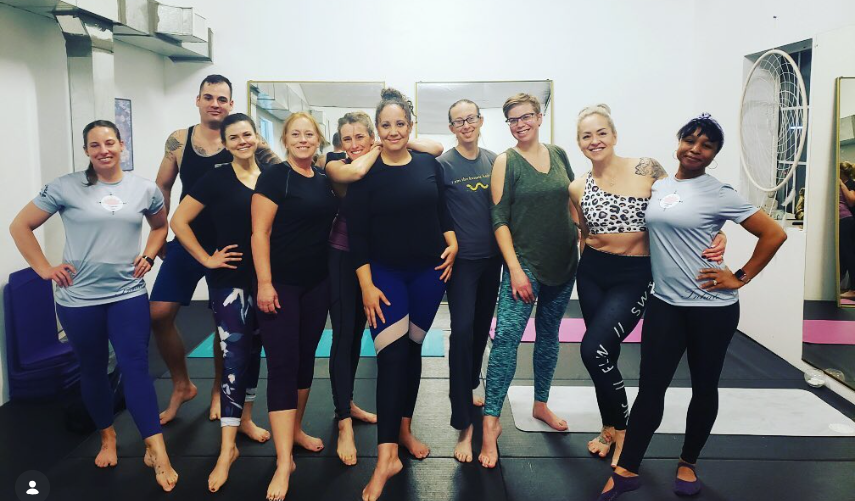
There is another part of belonging that I think is easy to miss. Belonging does not mean becoming indistinguishable from everyone else. We don't belong because we finally figured out how to look, move, speak, dress, or practice like everyone around us. We belong without having to erase the things that make us different.
That feels especially important in yoga. There is no single body that belongs on a yoga mat. There is no single age, level of flexibility, reason to practice, or way to experience a pose. There is no requirement that your practice look like someone else's.
Yoga belongs to everyone. And if we really believe that, then our responsibility isn't only to make room for ourselves. It's to notice who might still be standing outside the circle.
The New Person Is Not a Problem to Solve
I've spent a lot of my life being new, and I'm sure I'll spend more of it being new. I will probably move again. I hope I do. There is still something in me that loves the adventure of arriving somewhere I've never been before.
I know that the discomfort will probably come. I know I may feel inadequate. I know there will be things I don't understand. I know I may have moments when I wonder whether I belong. I also know that those feelings aren't necessarily telling me the truth. But I also know that those feelings are simply telling me that I am standing at the beginning of something and I know they will subside eventually. My discomfort will slowly transition into feelings of familiarity.
So maybe we don't need to wait until we're comfortable to participate. Maybe we don't need to wait until we're good enough. We don't need to wait until we understand everything. Perhaps we can walk into the room while we're still figuring it out and we can be the new person. We can be awkward and uncomfortable. We can ask the questions. And even when we suck we are allowed to stay.
I know, when we give ourselves the chance, unfamiliar can become familiar. The room can then become less intimidating. We will learn a few names. And, finally, we will find our place and discover that we were never required to arrive with the feeling of belonging.
One day, we will notice someone else standing at the edge of the room. The next, new person who doesn't know where to put their mat. The uncertain person. The person who looks like they're wondering whether they made a mistake by coming.
Hopefully, we remember what that felt like and so we walk over and say hello. We make some room and space. We will help them because we've been there.
So, maybe belonging isn't something we earn after we become comfortable. Belonging may begin when someone makes room for us while we're still uncomfortable. And when we are lucky, we get to be the person who makes that room for someone else.


Comments